Two kinds of movement
Water level is not water speed
A rising tide and a strong current are related ideas, but they are not interchangeable measurements. One describes level; the other describes movement along a direction.
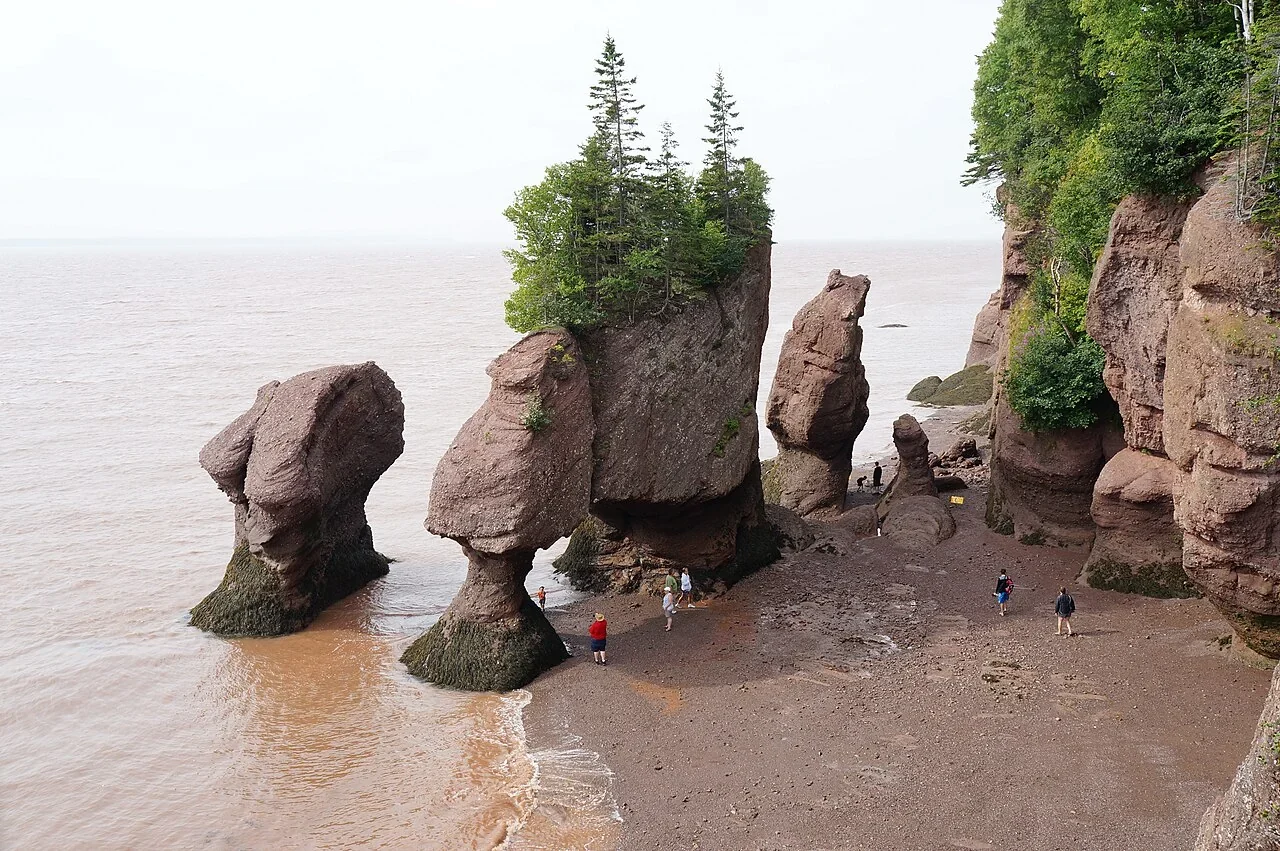
Read the vertical change
Tides describe recurring changes in water level. NOAA explains that gravitational effects of the Moon and Sun contribute to these changes, while the shape of ocean basins and coasts influences their local expression. A marked level on a shore tells you where the water stands at that location and moment, not how fast water is moving nearby.
Read the horizontal movement
A current describes water moving horizontally. Tidal currents are one part of that picture; wind and differences in water density can also drive circulation. A narrow passage can have a flow pattern that is not obvious from the appearance of the water level at the shore. Calm-looking water is not a measurement of current speed.
Choose the right official information
The Canadian Hydrographic Service publishes tide tables and current tables for different purposes. Tide tables give predicted high and low water times and heights. Current tables provide information such as predicted slack-water and maximum-current times and speeds. This journal is educational and does not supply navigation or local safety forecasts.
Read the primary sources
The explanation above is independently written. Sources support the factual foundations; examples and learning prompts are this publication’s own.